





A trouser defined by use
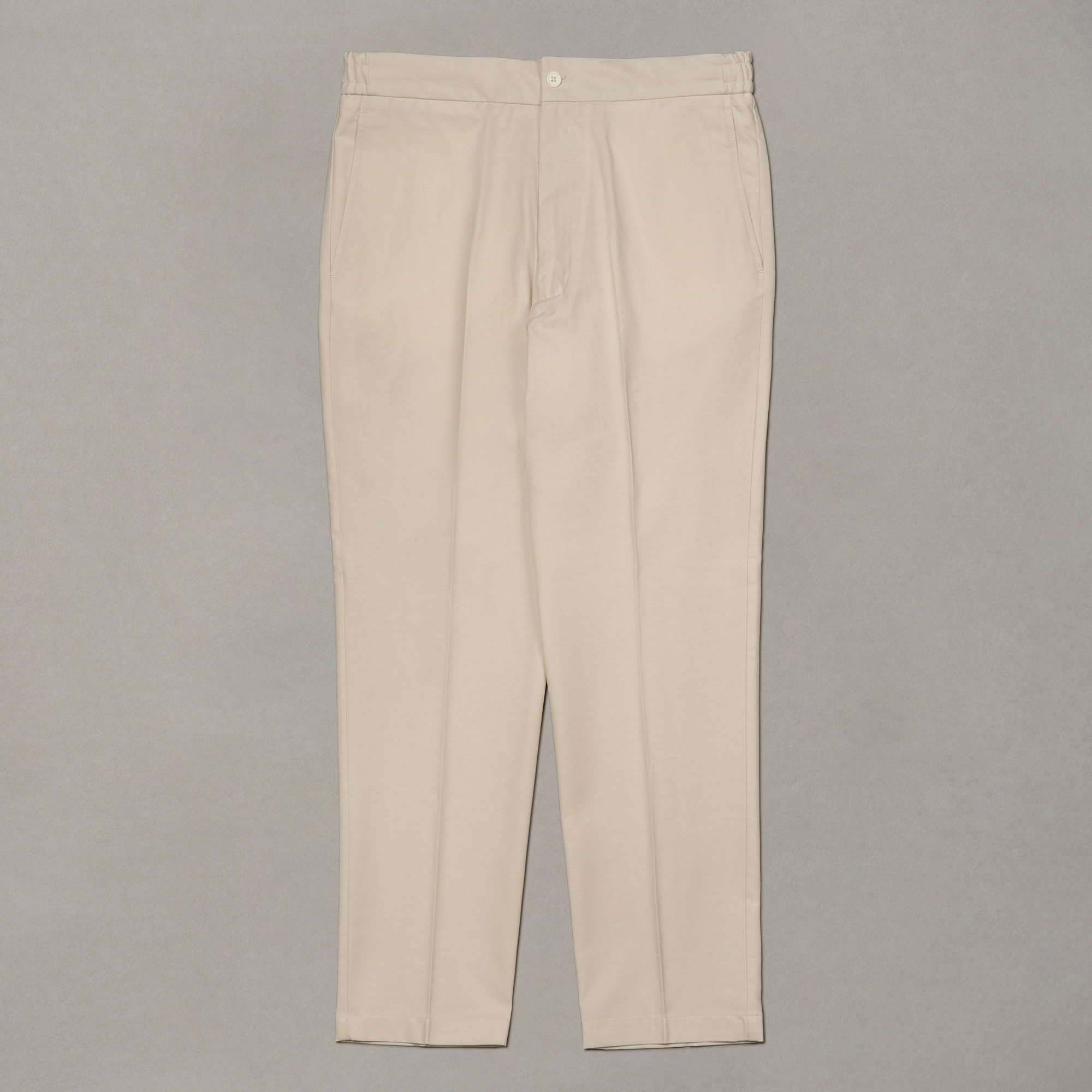
Cotton trousers occupy a useful place in modern menswear. They carry more structure than a jersey or drawstring style, yet feel less formal than wool trousers with a sharp crease. Their value lies in this range. A well-cut pair can move between work, travel, lunch and an evening engagement without changing its character.
The distinction begins with the cloth. Cotton has a direct, dry hand and a surface that changes gently through wear. Depending on its weight and finish, it can appear crisp and compact, soft and brushed, or lightly textured. This gives the trouser a different kind of presence from wool. Wool often brings fluidity and depth; cotton brings definition. The line is usually easier to read, particularly through the thigh and lower leg.
That clarity makes proportion important. Cotton does not conceal an uncertain cut. A trouser that is too narrow can feel restrictive and overworked, while excessive volume can lose its shape if the cloth lacks enough weight. The most convincing styles hold a calm line from the waist through the leg. They allow movement without gathering unnecessarily at the knee or ankle.
For this reason, cotton trousers should not be treated as a lesser substitute for tailored trousers. They are a category with their own purpose. A clean cotton trouser can bring ease to a jacket, discipline to knitwear, and balance to a simple shirt. It is often the piece that allows a wardrobe to feel composed without becoming overly formal.
Reading the fabric
Fabric weight affects both the appearance and the use of cotton trousers. A lighter cloth tends to sit closer to the body and responds quickly to movement. It can feel clean and direct, especially in a straight or gently tapered cut. A denser cotton has more authority. It holds the front of the leg with greater definition and gives pleats, turn-ups and a pressed crease more visual weight.
The surface matters just as much as the weight. Smooth cotton reads with restraint and works well when the rest of the outfit is equally clear: a fine-gauge knit, a cotton shirt or a softly constructed jacket. A cloth with visible texture can add depth without relying on pattern. In these cases, the trouser becomes part of the material conversation of the outfit rather than simply a neutral base.
Colour should follow the same logic. Navy, charcoal, stone, olive and warm beige are useful because they support repetition. They can return throughout a wardrobe without feeling fixed to one occasion. Darker shades tend to give cotton more formality, while lighter neutrals make the fabric’s relaxed character more apparent. Neither direction is inherently better. The choice depends on whether the trouser is intended to anchor a look or soften it.
Care also changes the life of the cloth. Cotton naturally develops character through wear, but that does not mean neglect is desirable. Allowing trousers to rest between wears, emptying pockets before hanging them and following the care label helps preserve the shape of the waistband, seat and knees. Pressing can restore a clean line, particularly on styles with a crease, but the aim is not rigidity. Cotton looks best when it retains its natural ease.
Rise, leg shape and proportion
The rise is one of the first details to consider. It determines where the trouser sits on the body and how the upper half relates to a shirt, knit or jacket. A higher rise can lengthen the leg visually and create a more settled relationship with tailoring, especially when a shirt is tucked in. A medium rise is often versatile, offering enough coverage and balance for everyday wear without feeling pronounced.
Leg shape should be considered from a distance rather than only in front of a mirror. A trouser may appear correct when standing still yet lose its line while walking or sitting. The aim is a shape that remains coherent in movement. A straight leg gives the cloth room to fall naturally. A gentle taper can create a more contained silhouette, provided there is enough space through the thigh and knee. Both can work; what matters is that the narrowing of the leg feels gradual rather than forced.
Length completes the proportion. Too much break can make even a well-made trouser feel heavy at the shoe. Too little length can interrupt the line and make the leg appear shortened. The most useful length is usually one that meets the shoe with a small, controlled break or rests just above it, depending on the width of the hem and the footwear. Wider trousers often benefit from a little more length, while a narrower leg can carry a cleaner finish.
Details such as pleats, side adjusters and turn-ups should be chosen for their effect on balance, not as decoration. Pleats can give useful room through the upper leg and bring a measured fullness to the silhouette. Turn-ups add visual weight at the hem, which can be particularly effective with a fuller trouser. Side adjusters create an uninterrupted waistband, though belt loops remain practical for many wardrobes. Each detail should support the shape rather than compete with it.
How cotton trousers work with the rest of the wardrobe
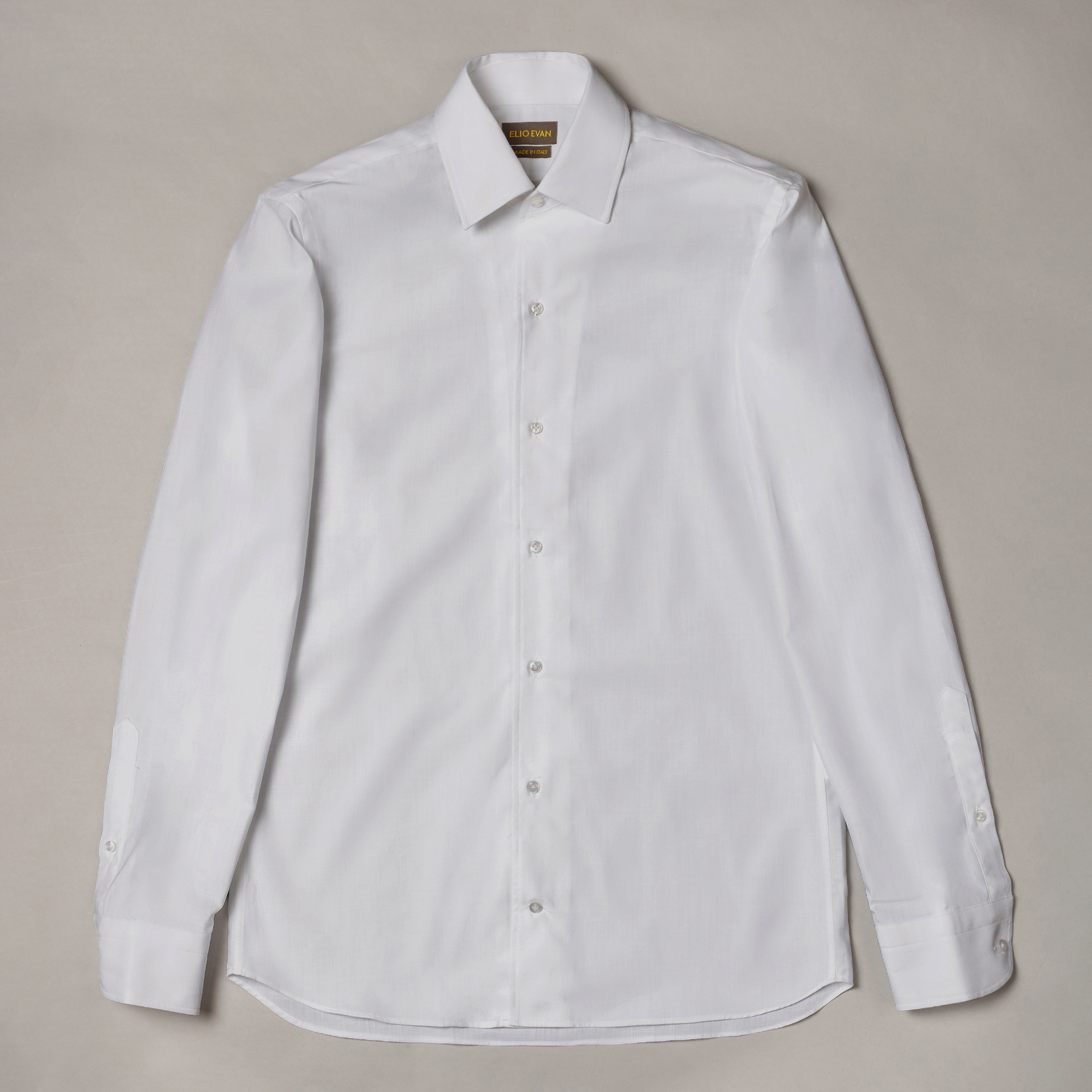
A wardrobe becomes more useful when its pieces can change register without losing coherence. Cotton trousers are especially strong in this role. With a cotton shirt and leather shoes, they can appear composed enough for a working day. With a polo or fine knit, they become quieter and more relaxed. With a jacket, they introduce a softer contrast to the formality of tailoring without breaking the line of the outfit.
Texture is often the simplest way to build these combinations. A smooth cotton trouser can sit well beneath a knit with visible structure, allowing the upper half to carry more material interest. A textured cotton trouser may need a cleaner shirt or knit so that the overall result remains calm. The principle is balance: when one surface has depth, the other can provide clarity.
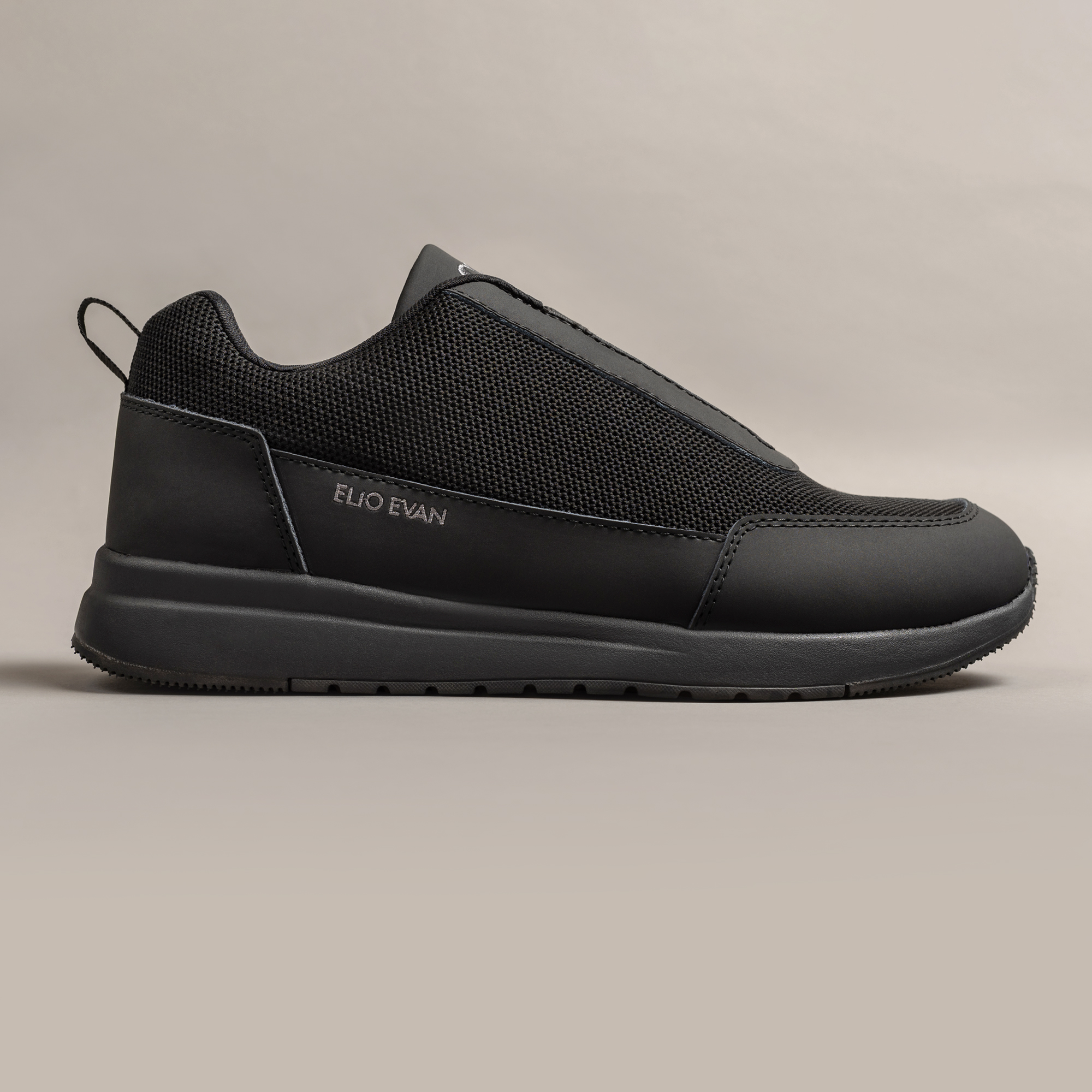
Footwear changes the trouser’s register without requiring a different garment. A leather loafer keeps the line light and precise. A derby shoe gives the trouser more weight and can support a fuller hem. Minimal leather trainers may work with a relaxed cotton style when the cut is not overly formal and the rest of the outfit remains simple. The trouser should meet the shoe cleanly; this small relationship often determines whether the whole look feels resolved.
A jacket does not need to match the trousers in colour or fabric to create continuity. A navy jacket with stone cotton trousers, for example, creates a clear relationship through contrast. Olive trousers can sit naturally with a dark brown knit or a navy overshirt. Charcoal cotton works with white, pale blue and deeper neutral tones. The point is not to build a formula, but to recognise that cotton allows colour and material to work with more freedom than a formal matching suit.
A lasting place in the wardrobe
The strongest cotton trousers are not defined by novelty. They earn their place through repetition. They are worn often because they answer ordinary situations with enough structure and enough ease. Over time, the cloth softens, the colour settles and the trouser becomes more familiar to the wearer. This is part of its value: not immediate display, but the confidence that comes from a garment understood through use.
When choosing a pair, it is worth looking beyond the initial impression. Consider the weight of the fabric, the height of the rise, the space through the thigh and the way the hem meets the shoe. Consider whether the colour will work with shirts, knitwear and jackets already in the wardrobe. A useful trouser should not require an entirely new set of purchases to make sense.
Elio Evan approaches trousers as part of a wider system of dressing. The line of the leg, the character of the cotton and the balance between structure and movement all contribute to presence. A well-considered cotton trouser does not need to announce itself. It simply gives the rest of the wardrobe a clearer foundation.
Login and Registration Form