





Linen Shirts: Proportion, Character and Everyday Use

Understanding the Character of Linen
A linen shirt has a recognisable presence before colour or styling enters the picture. Its surface catches light unevenly, the cloth moves with a particular crispness, and creases record the movement of the person wearing it. These qualities make linen different from a smooth cotton shirting fabric. The distinction is not simply one of formality. It is a different relationship between cloth, body and daily use.
Linen is made from flax fibres. In a finished shirt, however, the fibre name tells only part of the story. Yarn, fabric weight, density and finishing all influence how the cloth feels and behaves. One linen shirt may feel dry and substantial; another may be fine, supple and slightly transparent. Neither description establishes quality on its own. What matters is whether the fabric supports the intended shape and feels appropriate against the skin.
Linen is often chosen for its ability to absorb moisture and allow air to circulate, although the finished fabric and the garment's cut affect the experience. A closely fitting shirt in dense cloth will behave differently from a generous shirt in a more open fabric. Breathability belongs to the whole garment, not to the fibre label alone.
The visible irregularity of linen also deserves attention. Small variations in yarn can give the surface depth, but they should not be confused with damaged cloth or unstable seams. Character is most convincing when the shirt remains coherent: the material has movement, while the construction gives it a clear shape.
Proportion Gives the Shirt Its Shape
The most useful question when assessing a linen shirt is not whether it appears fitted or loose. It is whether its proportions work together. Shoulder width, sleeve volume, body length and collar scale influence how the garment sits. A little additional room can allow the cloth to move without making the silhouette oversized. Equally, a closer shape can retain ease if it does not pull across the chest or restrict the arms.
Begin with the shoulders and upper back. The shirt should allow a natural reach without obvious strain. A dropped shoulder may be an intentional design choice, so the seam position alone is not a universal test. Look instead at the complete outline. If the shoulder is generous, the sleeve and body should make sense beside it. Accidental excess and deliberate volume read differently.
Across the chest, the button placket should lie comfortably when the shirt is fastened. Persistent pulling between buttons suggests that more room may be needed. At the other extreme, substantial folds under the arms can indicate more fabric than the intended silhouette requires. Linen's creasing makes these tensions visible, which is why movement matters as much as a still reflection.
Length establishes another important distinction. A shirt intended to remain tucked in needs sufficient cloth to stay secure during ordinary movement. An untucked shirt requires a hem that resolves the silhouette rather than extending it without purpose. There is no single correct measurement for every body. The judgement is visual and practical: the shirt should balance the torso and remain comfortable in use.
Reading Fabric, Colour and Construction
Fabric weight changes the character of a linen shirt considerably. Finer cloth may sit closer to the body and reveal more of what lies beneath it. A heavier fabric can create a more defined outline, although weight alone does not determine softness or opacity. When possible, assess the shirt in natural light and observe how it hangs rather than relying entirely on a folded presentation.
Composition provides useful information, but it should be read precisely. A linen and cotton blend may combine some of linen's surface character with a different hand feel and crease pattern. The result depends on the proportions and the way the fabric is made. A blend is not automatically more formal, easier to maintain or less prone to creasing. Those qualities need to be assessed in the actual garment.
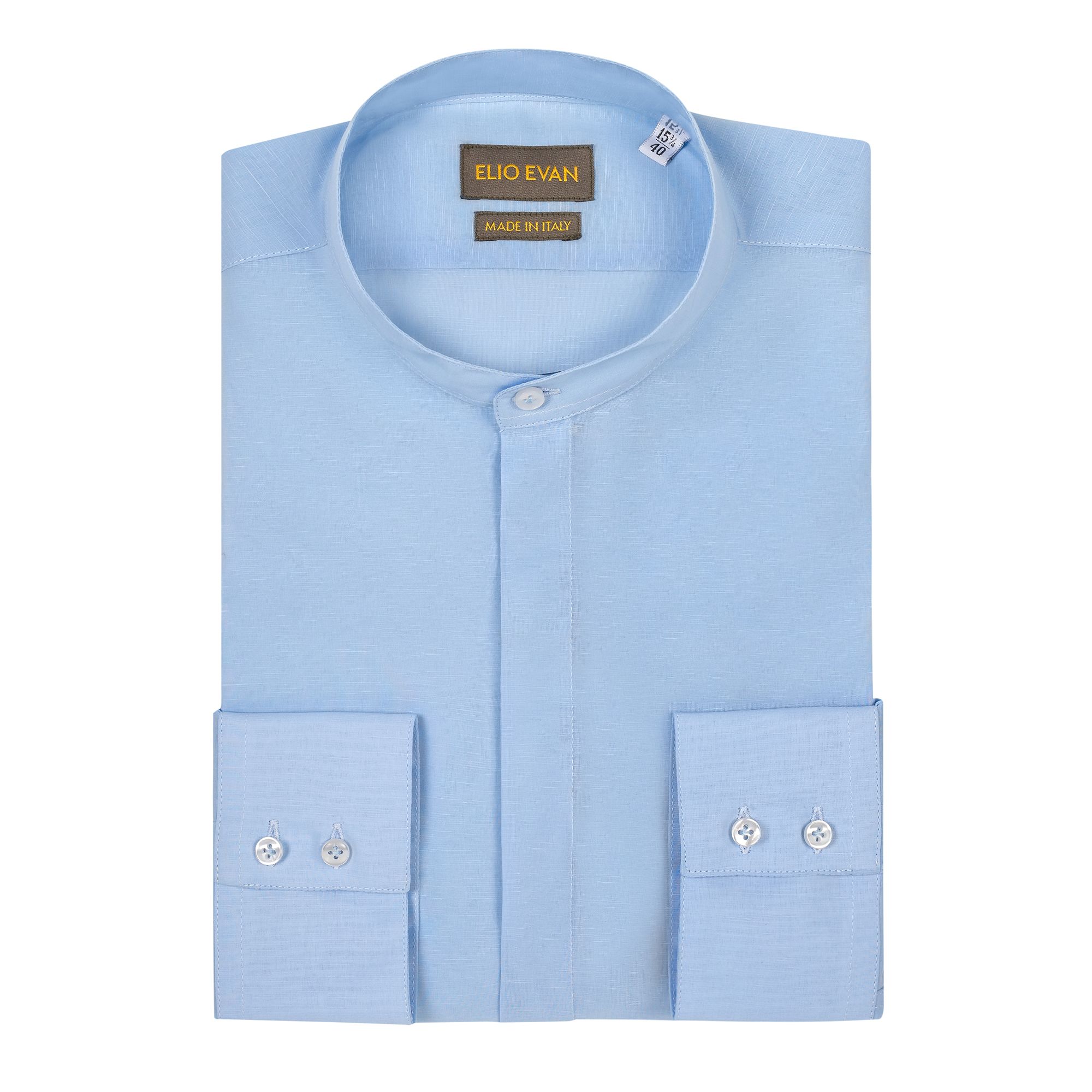
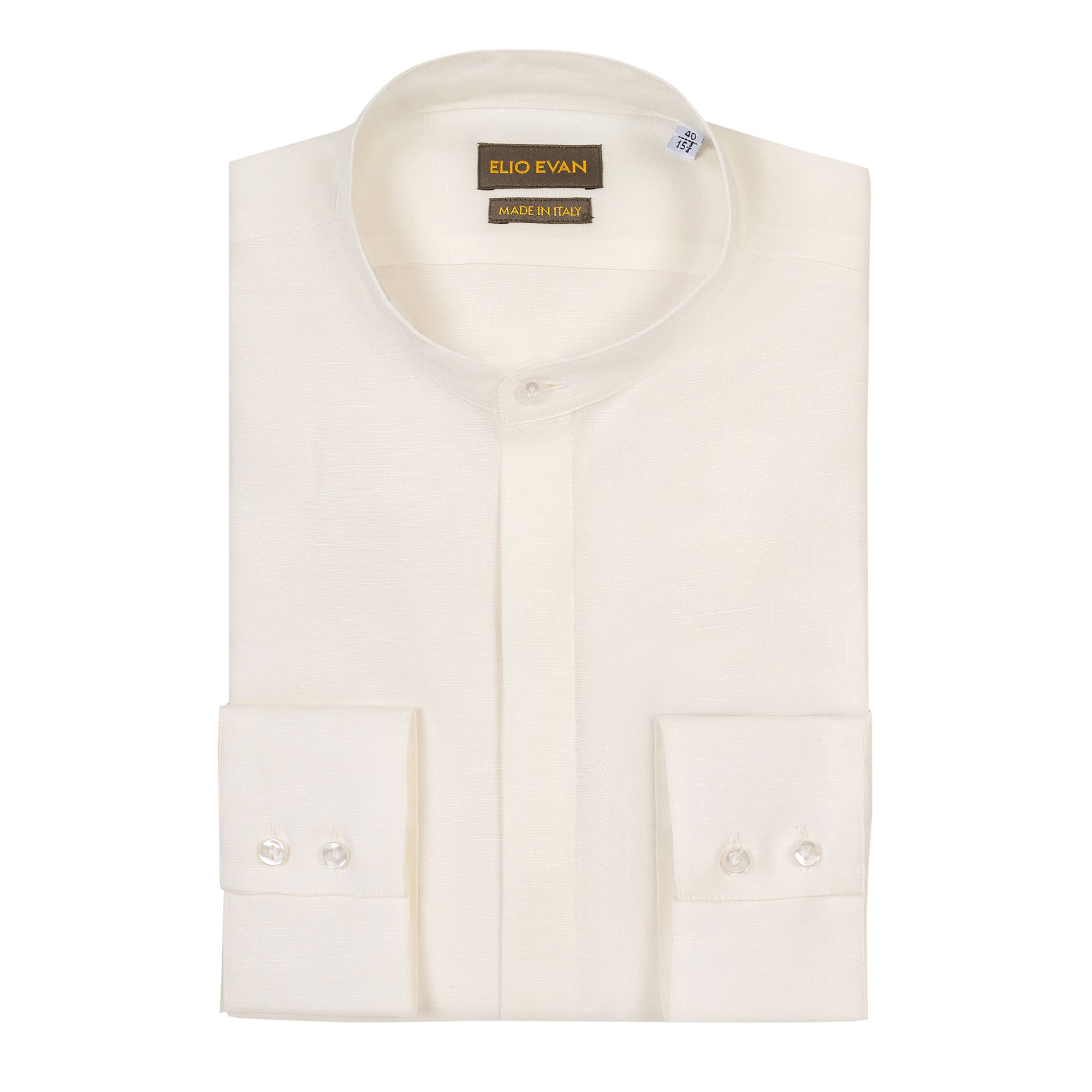
Colour affects how these material differences appear. White and pale shades make transparency and surface variation more apparent. Darker colours can give linen a more contained visual character, though they do not remove its movement or creases. Consider the colour in relation to the clothes already worn regularly. A shade that belongs naturally within an existing palette is more likely to remain useful than one chosen only for novelty.
Construction should support the fabric without becoming a list of decorative claims. Check that seams sit cleanly, buttonholes are neatly finished and the collar holds the shape intended by the design. Where extra layers of fabric meet, such as at cuffs and collar points, the finish should feel controlled rather than unnecessarily bulky. These are modest observations, but together they reveal how carefully the shirt has been resolved.
Finding the Right Degree of Formality
A linen shirt does not belong exclusively to casual dressing. Its level of formality emerges from the complete design: collar, proportion, colour, fabric and finish. A shirt with a defined collar and a restrained outline can sit comfortably beneath a jacket. A broader body and a softer collar create a different relationship with the wearer, one that feels less contained without necessarily appearing careless.
When a shirt is worn beneath a jacket, the collar deserves particular attention. It should settle comfortably within the jacket's neckline rather than collapsing awkwardly or pushing against it. The shirt sleeves also need enough room to move without collecting excessively inside the jacket sleeve. This is a question of proportion between garments, not a requirement that every piece fit closely.
The relationship between surfaces matters as well. Linen introduces visible variation, so it can change the character of otherwise smooth clothing. That contrast may be welcome, but it should look intentional. A shirt need not match the surrounding garments in texture; it needs to belong beside them. Keeping colour relationships clear often allows the fabric to contribute character without making the whole composition feel busy.
There are limits to its formality. Linen's changing surface may not suit an occasion that requires a consistently crisp appearance or a prescribed dress code. The decision should follow the context rather than a claim that one shirt works everywhere. A well-chosen linen shirt earns its place by serving particular parts of daily life convincingly, not by pretending to replace every other shirt.
Care, Creasing and Long-Term Use
Creasing is part of linen's behaviour, but accepting it does not mean neglecting the garment. There is a difference between the folds that develop through wearing and a shirt that has been stored carelessly. Beginning with a clean, considered shape allows the material to change naturally during the day. The aim is not to preserve a motionless surface, but to keep the overall appearance composed.
Always follow the garment's care label. Washing temperature, drying method and ironing instructions can vary with colour, finishing, composition and construction. General advice about linen should never override those details. Avoid assuming that every linen shirt can be treated identically simply because the main fibre is the same. Appropriate care begins with the instructions for the specific piece.
Where washing is permitted, allowing room in the machine and removing the shirt promptly can help reduce deep, compressed folds. Reshape it gently before drying according to the label. If ironing is allowed, working while the fabric is slightly damp can make creases easier to manage. The appropriate heat setting still depends on the garment's instructions, particularly when linen is blended with other fibres.
Over time, many linen fabrics become softer through wear and laundering, though the extent depends on the cloth and its finish. That gradual change can become part of the shirt's appeal. Long-term value lies in choosing a proportion that remains useful, a colour that continues to belong and a fabric whose character is genuinely enjoyed. A linen shirt is worth keeping when its changing surface strengthens the relationship with the wearer rather than becoming something to resist.
Login and Registration Form