





Silk Suits: Cloth, Light and Line

What Silk Brings to a Suit
A silk suit begins with the relationship between cloth and light. Where some fabrics absorb light and create a relatively uniform surface, silk can reveal changes in tone as the wearer moves. That quality need not mean a conspicuous shine. Depending on the yarn, weave and finishing, silk cloth can appear restrained, irregular or more visibly lustrous. The useful question is not whether silk looks formal or extravagant in the abstract, but how a particular fabric behaves within the proportions of a suit.
Silk is a fibre, not a single type of cloth. Its name alone does not establish weight, texture, opacity or drape. Two fabrics labelled pure silk may produce markedly different silhouettes: one might hold a defined outline, while another falls more fluidly. A photograph can suggest these differences, but cannot fully communicate the fabric’s hand or behaviour. Composition is therefore a starting point. Weight, construction and the experience of seeing the garment in movement complete the picture.
The familiar lustre of silk comes partly from the way its fibres interact with light, though the finished appearance also depends on processing and fabric structure. Some silk suitings have a dry-looking surface rather than a smooth sheen. Others show small irregularities in the yarn. These variations should be described accurately, rather than gathered under a general promise of softness or brilliance. Neither a polished surface nor a textured one is inherently more accomplished; each establishes a different character.
For Elio Evan, proportion, material and function are considered together. Applied to silk suits, that point of view places the cloth in service of the silhouette rather than treating it as an ornament. A measured shoulder, a balanced jacket length and an uninterrupted trouser line matter as much as the fibre itself. Silk becomes compelling when its surface and movement clarify those decisions, not when its name is asked to stand in for them.
Pure Silk and Silk Blends
The distinction between a pure silk suit and a silk-blend suit is more than a difference in percentage. Pure silk allows the character of the silk fabric to lead, but its practical qualities still depend on how that fabric is made. It should not automatically be assumed to be delicate, weightless or fluid. A substantial silk suiting can have a firm presence, while a lighter construction may be more responsive to movement and require a different approach to fit.
Wool and silk blends bring two fibres into the same fabric, often creating a balance between wool’s resilience and silk’s contribution to surface and handle. The result is not predictable from the label alone. A modest silk content may make a subtle difference, while a larger proportion can be more apparent. Yarn choice and finishing remain important. Rather than assuming that more silk means a better suit, consider whether the cloth offers the structure, appearance and comfort required.
Silk can also be blended with linen or cotton. Linen and silk fabrics may retain visible irregularity and a more relaxed surface, while cotton and silk combinations can offer a different balance of body and lustre. These are broad possibilities, not guarantees about an individual garment. Creasing, softness and breathability cannot be reliably inferred from a fibre pairing without considering the finished cloth. The composition describes what is present; it does not tell the whole story of performance.
When assessing a ready-to-wear suit, read the outer fabric composition separately from the lining composition. Silk in the lining does not make the outer cloth a silk suiting. Likewise, a silk-blend jacket may be accompanied by trousers with a different composition, particularly when pieces are sold separately. Confirm the details of both garments. Clear information allows material choices to be understood on their own terms, without relying on a broad product name.
Silhouette, Colour and Occasion
Silk draws attention to the way light travels across a garment, which makes a balanced fit especially important. Tension across the jacket front, pulling around the seat or excess cloth at the trouser ankle can interrupt the intended line. These are not problems unique to silk, but a reflective surface may make them more apparent. The aim is sufficient room for ordinary movement while maintaining a clear outline, rather than choosing a close fit merely to appear more formal.
The shoulder should sit convincingly, and the jacket should hang without persistent twisting or strain. Trousers should fall cleanly from the waist, with enough room through the thigh to allow sitting and walking. A narrow trouser is not automatically more contemporary, just as a fuller leg is not automatically more relaxed. The relationship between jacket volume and trouser width determines the overall balance. Check that relationship both standing still and moving.
Colour changes the reading of silk. Dark blue, charcoal and brown can reveal tonal depth without making lustre the principal feature. Paler colours may make folds, shadows and surface variation more visible. Black can appear particularly reflective in some finishes and subdued in others. No colour guarantees restraint on its own. View the suit in daylight as well as indoor lighting where possible, because the same cloth can look noticeably different under each.
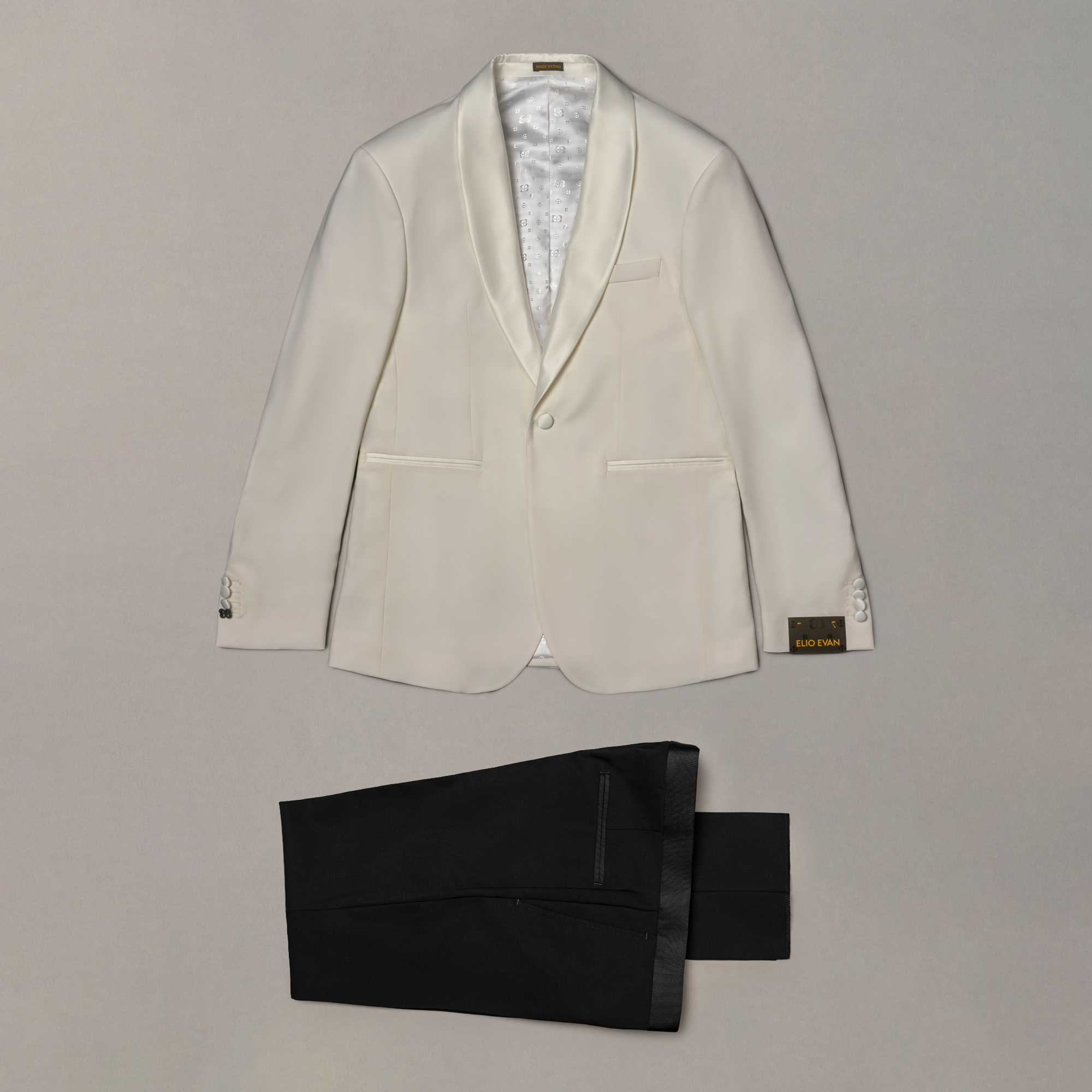
Occasion should guide the choice without reducing silk to evening dress alone. A restrained wool and silk suit may suit a professional setting, while a more lustrous pure silk cloth can carry a distinctly ceremonial character. For a wedding or formal reception, consider the invitation, location and expected level of dress. Silk content does not establish a dress code: a silk suit is not automatically a tuxedo, nor a substitute for one when black tie is specified.
The surrounding clothes should allow the suit’s material to remain legible. This does not require a rigid formula or an entirely plain appearance. It means considering how much visual information is already present in the cloth. Pronounced lustre, visible yarn irregularity or a strong colour may each provide sufficient interest. A shirt or tie can introduce contrast, but several competing surfaces can obscure the line that gives the suit its presence.
Care, Wear and Lasting Value
A silk suit rewards attention to its care label. Silk fabrics and blends can respond differently to moisture, heat and cleaning methods, so advice for a silk shirt or scarf should not be transferred automatically to a constructed jacket. Follow the garment-specific instructions, including any restrictions on pressing or professional cleaning. If the label is unclear, seek guidance from the retailer or a cleaner experienced in suits before attempting treatment.
Between wears, allow the suit to air in a dry, shaded space and store the jacket on a supportive hanger. Give it room rather than pressing it tightly between other garments. Avoid prolonged exposure to direct sunlight, which can affect colour. Inspect the cloth before brushing, as a rough brush may catch a more vulnerable surface. These habits reduce unnecessary handling while allowing the garment to recover from ordinary wear.
Spills call for restraint. Avoid rubbing, applying household stain removers or using direct heat, all of which can make a local mark more difficult to address. Follow the care instructions and seek professional advice promptly when needed. Pressing also requires judgement: excessive heat or pressure can alter a fabric’s surface. A visible crease is not an invitation to use the hottest iron setting, particularly where the finish is part of the cloth’s character.
Lasting value lies in choosing a suit whose material and silhouette have a genuine place in daily life or recurring occasions. Pure silk is not inherently a wiser purchase than a blend, and a higher silk percentage is not a measure of suitability. The more useful assessment brings composition, fit, intended use and care requirements together. A silk suit earns its place when its cloth contributes something specific to the way it is worn: depth of colour, a particular fall or a measured response to light.
Login and Registration Form