





Wool Trousers and the Shape of Modern Dressing

Cloth Gives the Trousers Their Character
Wool trousers establish much of the shape of an outfit before a jacket enters the picture. They determine where the waist sits, how the leg falls and how the lower half of the body relates to the shoulders. Their appeal is not confined to formal dressing. Depending on the cloth and construction, they can bring definition to a simple shirt or give a knitted top a more deliberate silhouette. The starting point is the material itself: not wool as a label of quality, but wool as cloth with a particular weight, surface and movement.
Two pairs described as wool trousers may behave quite differently. Fibre characteristics, yarn, weave and finishing all contribute to the result. Some cloths have a smooth surface and a clear line; others appear softer or more visibly textured. A fabric that feels substantial between the fingers may hold the shape of the leg differently from a lighter cloth. None of these qualities is automatically preferable. What matters is whether the fabric supports the intended silhouette and feels appropriate for the way the trousers will be used.
Worsted wool is generally made with combed fibres aligned into smoother yarns, often producing cloth with a relatively clean surface. Woollen fabrics typically have a less uniform surface and can feel fuller. These are useful distinctions, rather than guarantees of weight or warmth. The finished cloth still needs to be assessed on its own terms. A close look at the surface, followed by a few steps in the garment, reveals more than an isolated fabric description.
Composition deserves the same attention. Pure wool and wool blends offer different possibilities, but a percentage alone cannot establish how trousers will perform. An added fibre may affect stretch, handle or maintenance; its effect depends on the complete fabric. Read the composition alongside the care label, then judge how the material hangs and moves. The useful question is not whether the label sounds impressive, but whether the cloth has the character the wearer wants.
Proportion Starts at the Waist
The waist position changes the whole reading of wool trousers. A higher rise places more of the trouser above the hip and can create a longer visual line through the leg. A lower rise shifts that balance and may leave more shirt visible between the waistband and jacket. Neither should be treated as a rule for every body. The right position is one in which the trousers sit securely, the torso and legs feel balanced, and movement does not require constant adjustment.
Fit should be considered through the waist, seat and thigh before attention turns to the hem. A waistband that feels comfortable while standing may become restrictive when seated. Pulling across the pockets, persistent horizontal creases or tension around the seat can indicate that more room is needed. Excess fabric can also disrupt the line, particularly when it gathers beneath the seat. Trying the trousers while sitting, walking and bending is more informative than judging a single still view in the mirror.
Leg width gives the cloth space to express itself. A narrow leg can create a close outline, but it must still allow the fabric to fall without catching on the calf. A straighter or fuller leg lets the material move more freely and can balance a jacket with greater volume. The decision is less about choosing between narrow and wide than about finding a continuous line from the hip downwards. Wool often rewards this attention because its drape makes interruptions in that line visible.
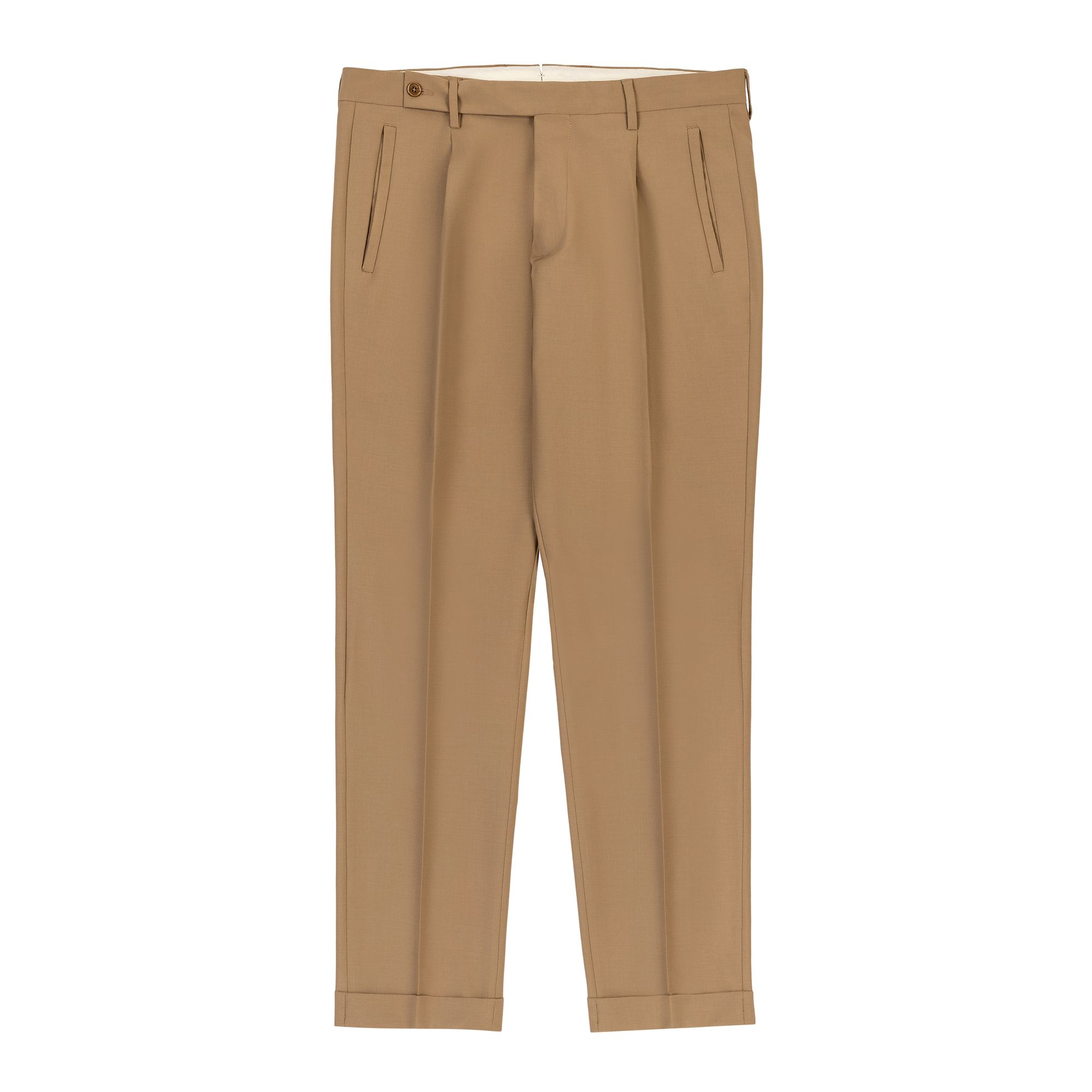
Pleats and flat fronts approach volume differently. Pleats introduce fabric at the front of the waist, which can provide room as the body moves; a flat front presents a simpler surface. Either can work in a composed wardrobe. Length completes the proportion. A clean hem with little break reads differently from a longer trouser resting more fully on the shoe. Assess the length with the footwear likely to be worn, because the shape and height of the shoe affect where the cloth settles.
A Place Beyond the Suit
Wool trousers do not need a matching jacket to make sense. Worn separately, they offer a way to introduce a defined silhouette without carrying the full register of a suit. The effect depends on the relationship between pieces: their proportions, surfaces and degree of formality. A smooth, clearly pressed trouser may read more formally than a softer pair with a fuller leg. That distinction matters more than assuming that every wool trouser belongs to the same occasion.
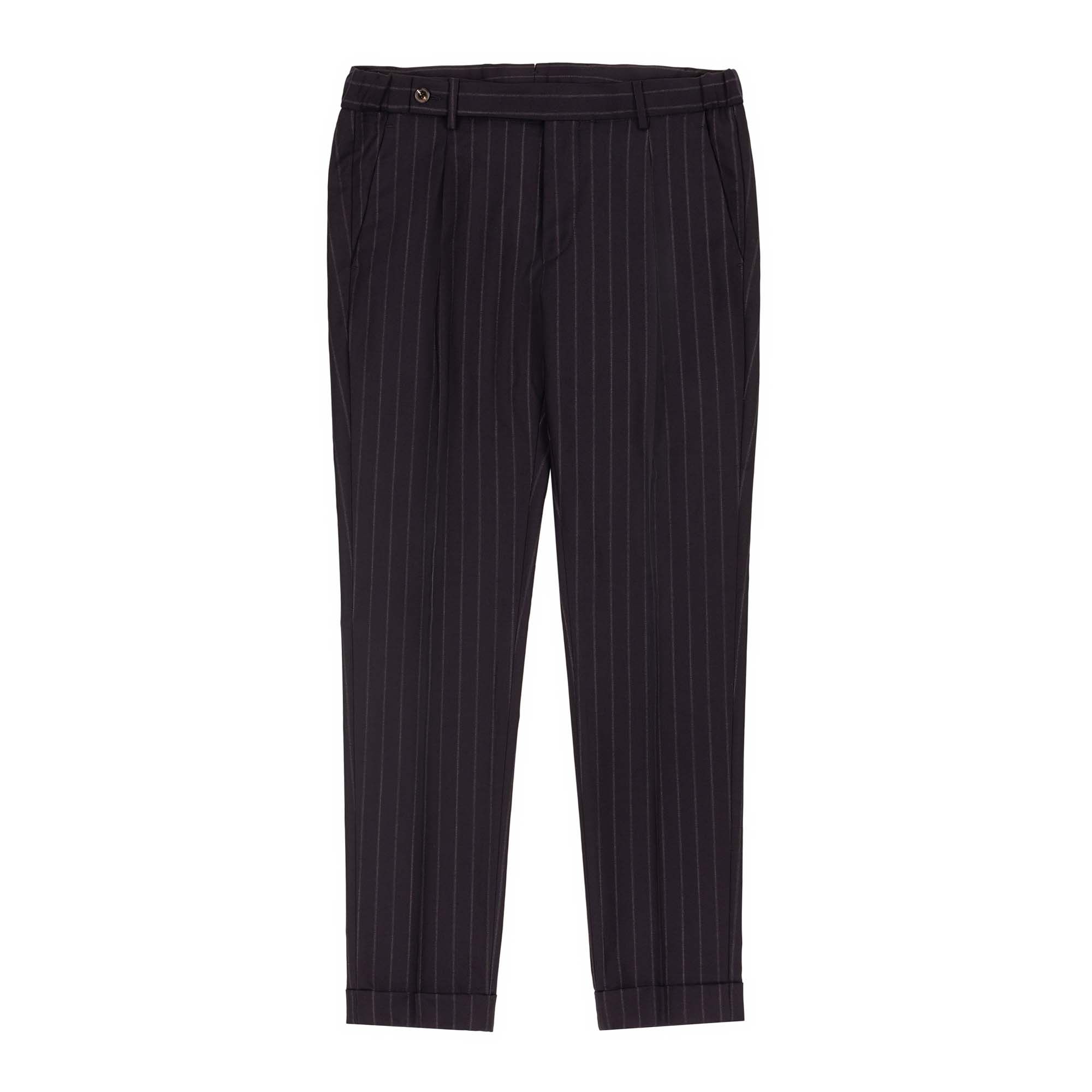
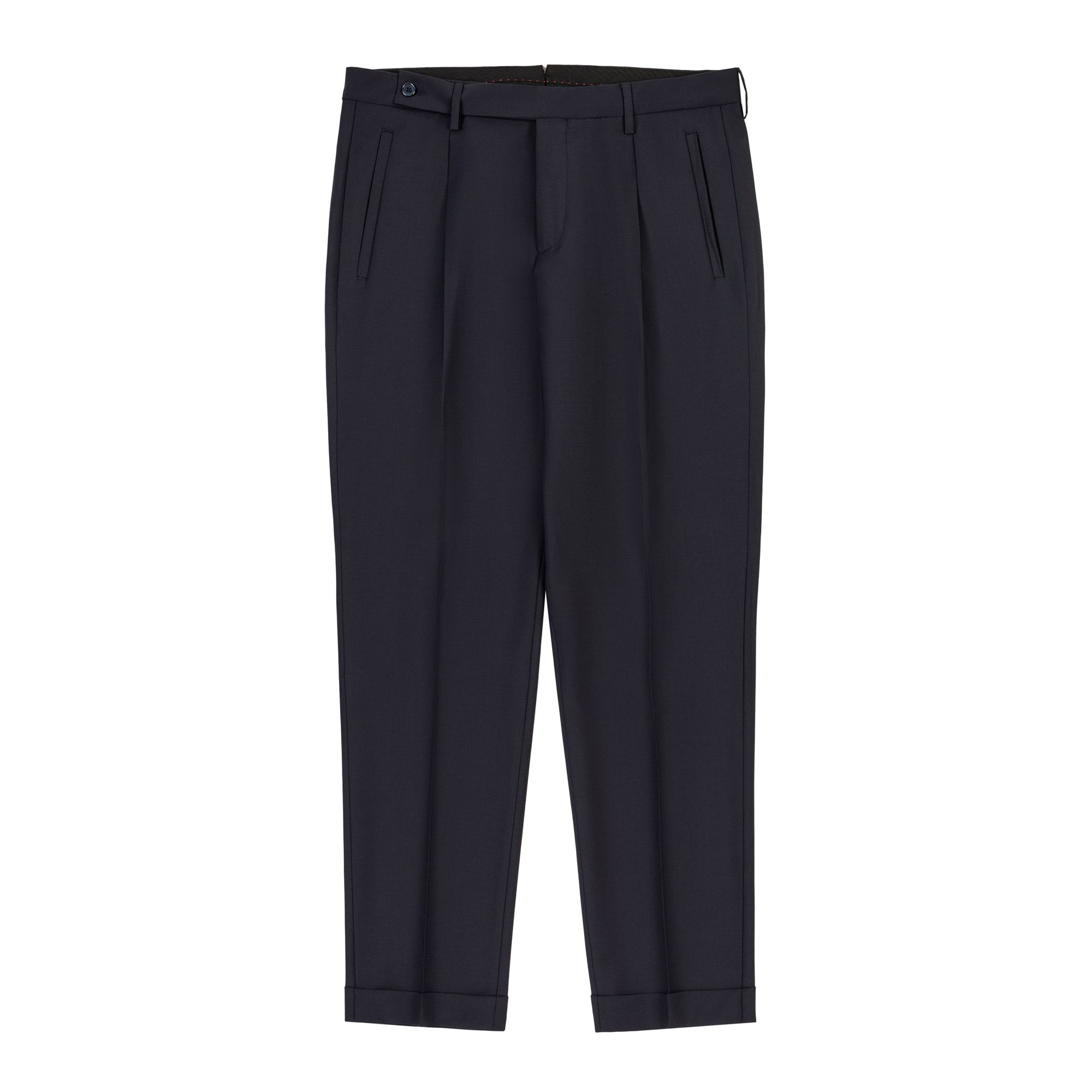
Colour helps establish continuity. Charcoal, navy and shades of grey can connect with an existing wardrobe while retaining different characters. Charcoal often provides a darker foundation without the visual severity of black. Mid-grey makes contrast more apparent, particularly against deeper colours. Navy brings another kind of depth, though its relationship with a blue jacket needs to be considered carefully. Near-matching colours can look unresolved when they seem intended to form a suit but do not share the same cloth.
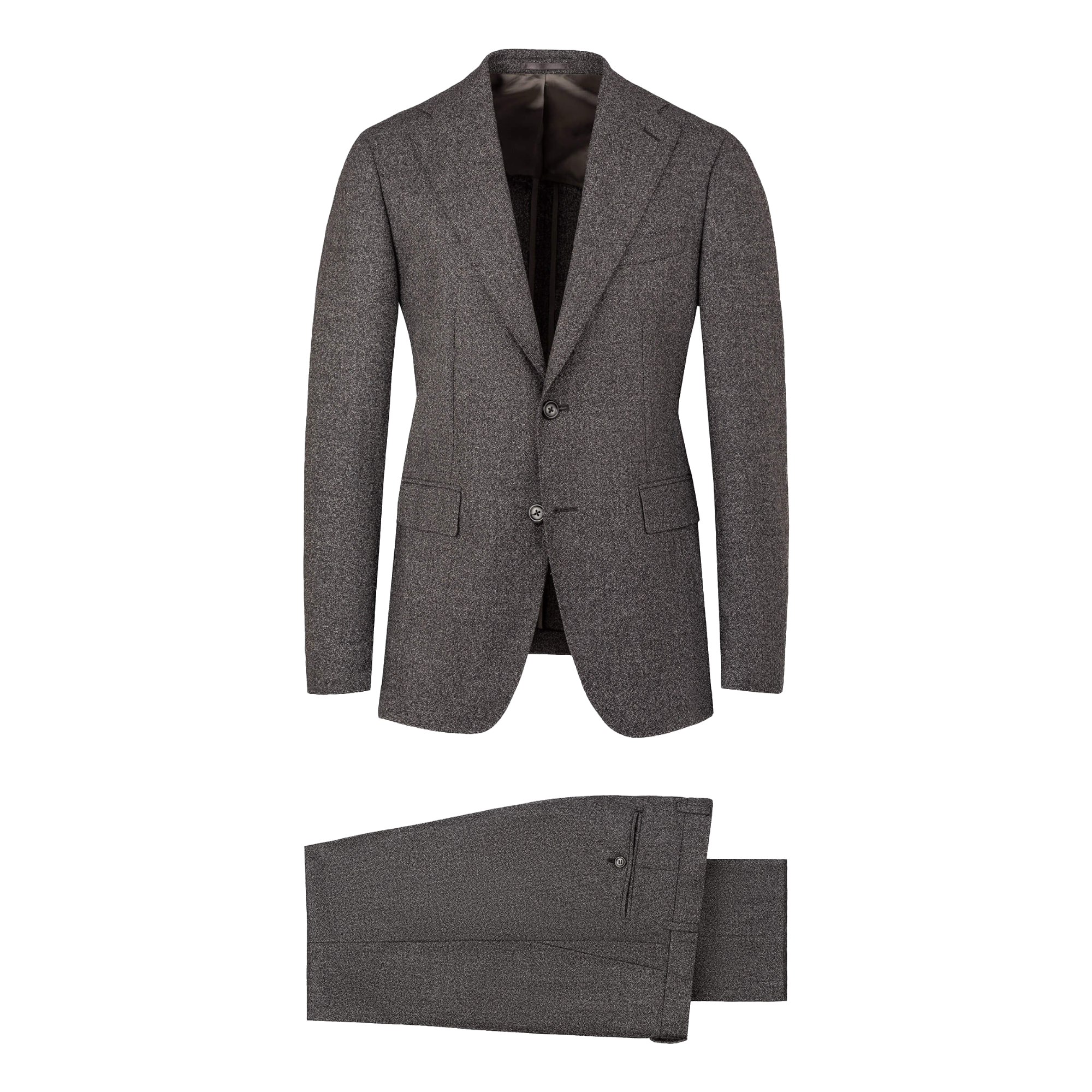
Surface is equally important. Trousers and a separate jacket need not match, but their difference should feel deliberate. Contrasting cloths can give each piece a clear role rather than creating an approximate suit. With knitwear, the balance may come from the relationship between the volume of the top and the fall of the leg. A broader trouser can support a more substantial upper silhouette, while a closer line may suit less volume. These are relationships to observe, not combinations to follow mechanically.
For Elio Evan, clothing is considered as part of the same world: proportion, material and function working together. Wool trousers offer a useful way to understand that perspective. Their value becomes apparent through repeated wear and the ease with which they belong alongside other pieces. A well-chosen pair should not depend on one carefully arranged outfit. It should retain its character across the situations the wearer actually encounters, without losing the clarity of its line.
Care That Preserves the Line
Good care begins with the instructions attached to the garment. Wool trousers vary in composition, finish and construction, so there is no single cleaning method suitable for every pair. Some require professional cleaning; others may permit a specified washing process. Follow the label rather than applying general advice about wool to a finished garment. Waistbands, pocketing and other internal components also need to be considered, even when the outer cloth appears straightforward.
Between wears, allow the trousers to air in a dry, ventilated space. Check for marks before putting them away, since a small spill is easier to address when its source is known. A garment brush suitable for the cloth can remove surface dust and lint, used gently rather than repeatedly over one area. Cleaning should respond to the condition of the trousers and their care instructions, not become an automatic ritual after every wear.
Storage helps protect the silhouette. A suitable trouser hanger can support the garment without crowding it against other clothes. If folding is necessary, align the legs carefully and avoid leaving them compressed beneath heavier items. Pressing also requires restraint: excessive heat or pressure can affect the surface. Follow the label's ironing guidance and use a pressing cloth where appropriate. When a defined crease is part of the design, maintaining its position preserves the intended line.
The lasting value of wool trousers comes from attention at both ends of ownership: choosing them well and caring for them consistently. Cloth, rise, leg shape and length should form a coherent whole before purchase. Afterwards, considered cleaning and storage help retain that balance. The result is not a garment kept aside for an imagined occasion, but one that earns its place through use. Its presence comes from how naturally material and proportion work together on the body.
Login and Registration Form